Designing a Better Climate Movement
An Update

I’ve been working on designing an unstoppable climate movement for some time now. It’s a slow process of understanding the complexities at play, distilling them down to the simplest of elements, piecing the solutions into a pathway for success. Each new iteration is better than the last.
In one sense, I have been working on this challenge my entire career, starting with a provincial organization called the Conservation Council of Ontario in the 1980s. With 25 organizations and 50 individual members, the council worked to build consensus around conservation issues, including nature, forestry, agriculture, land use, water, and the overall concept of a conserver society. We also worked on special projects to demonstrate innovative solutions, such as community forestry, urban stream naturalization, community planning, and energy conservation. Many of the seeds of what I am now proposing lie within the work of that Council. It was truly a tremendous organization to work for, and it may yet serve as a model for future collaborative transition efforts.
One problem has always stymied me. It’s one thing to map out theoretical approaches, but how can we put them into practice? I would love nothing more than to be able to say, “Here, take this pill and all your troubles will melt away.” But I can find no such simple solution. The closest I can get, to continue the health analogy, is to say, “Here’s some pills that can help, but you still have to change your diet.” Even Ozempic says you should exercise.
But I’m getting closer.
When I started working on designing a better climate movement, my focus was on climate marketing, and specifically the blue ring as a symbol of our climate and our movement. This was for good reason (and not just my distant background in environmental media). The anti-climate movement has been dancing circles around us with advocacy messaging aimed at shifting public sentiment, while we have been trying to convince people that climate change is real and that they should be more concerned. They have been successful at isolating our climate a single minor issue instead of the wholly connected and important issue that it is. In the world of economics and policy, public sentiment is everything. Which means marketing is everything.
Along the way, I realized that marketing alone can’t save the world. It can definitely influence how people think, but for long term change we need good solutions as well. Solutions people want. Which means the entire climate movement needs to shift from selling policy to selling people. Yes, the science matters. Yes, government leadership is crucial. Yes, we need public support. But the path to a strong social mandate lies in designing and promoting solutions that work – solutions that address our economic woes, job security, energy security, the cost of living, urban gridlock, safe streets, and our health and hope for a better future. And a strong social mandate is what will get us the leadership, the policy, the pathways, and solutions to a cleaner, resilient, and better future.
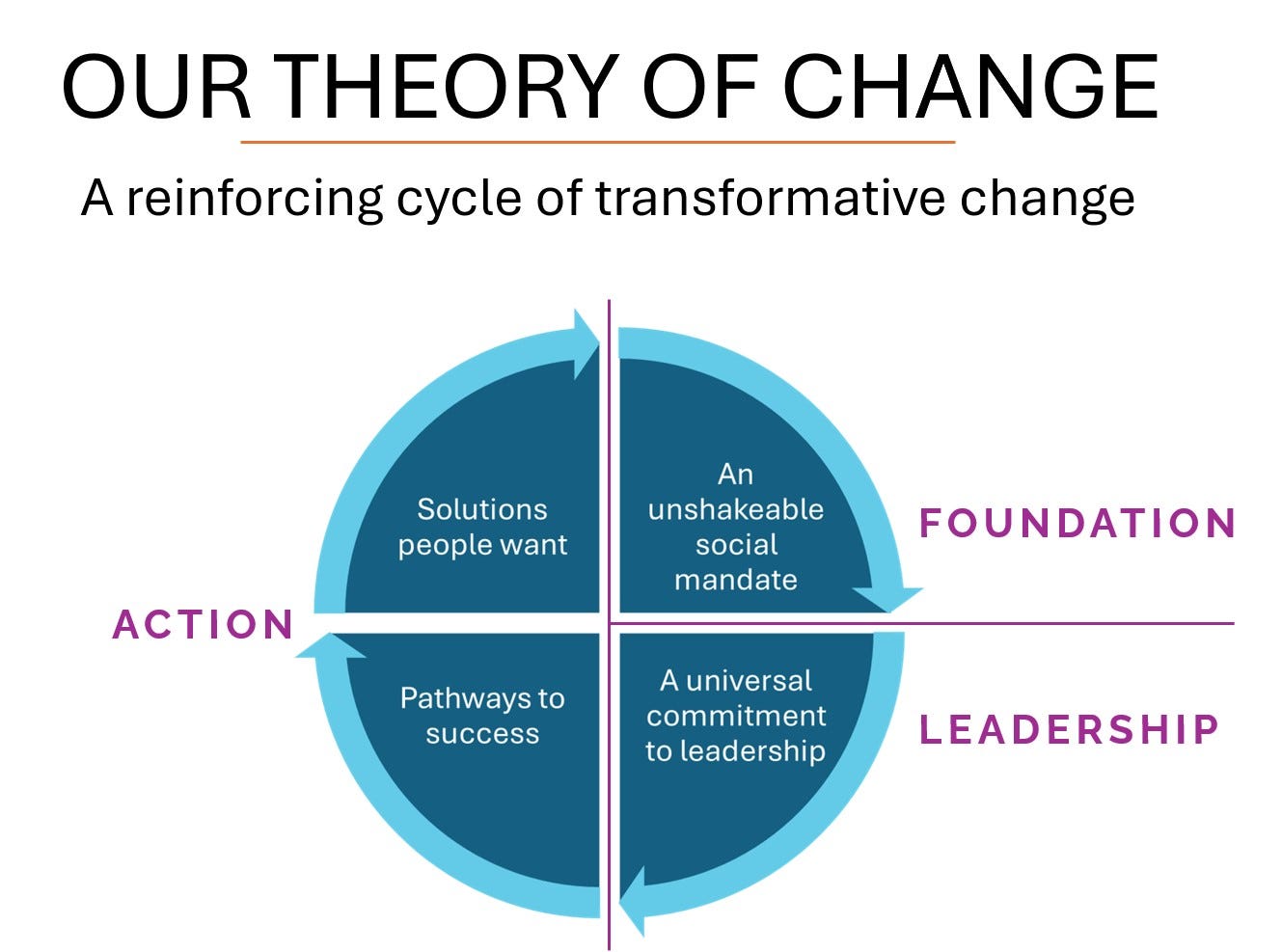
We must become a social movement.
It’s complex, yes, but it can be distilled down to four key actions:
1. Think like a movement: Become a social movement. Focus on solutions people want rather than polices we want, based on a foundation of common values, principles and goals
2. Mobilize the movement: Build community and solutions networks. Mobilize for success, locally to globally, through collaboration and networking to identify and implement solutions.
3. Market the movement: Sell our values, vision and solutions. Market the climate and our solutions using our combined networks and common messaging.
4. Be the movement: Make change happen. Put the pieces together into collaborative, movement-based campaigns, starting with a global campaign to promote global leadership on the climate.
Shifting an entire climate movement is no small task, but there are actions we can all take that will help us all shift to a proactive, collaborative, and solutions-based approach. Here’s some ideas on how you can help:
INDIVIDUALS: live according to our common values: live lightly, help each other, and enjoy life. Use your voice, votes, and purchasing power to support solutions that support a clean, resilient, and better future.
ORGANIZATIONS AND COMPANIES: lead on finding climate solutions with clear social benefit. Help build the social mandate for leadership. Create or join community or solution-oriented networks to develop pathways to success.
CREATIVES: help build momentum with creative designs, posts, posters, protest signs and merch that use the blue ring and positive messaging to support a global climate movement.
FUNDERS AND GOVERNMENTS: Support the planning, networking and the development and implementation of solutions that connect climate action with social benefit and a clean economy. Facilitate the smooth transition to a clean, resilient future.
ALL OF US: Talk about the future we want and the solutions that will get us there - in every climate week and COP, in every community and solutions network, and at every climate conference. Make building an unstoppable, global climate movement our top priority.
If you want more details, check out the updated website: https://climatemovement.net. Just be aware that the next iteration may be slightly different, and even more focused.
Finding a catalyst
There’s one last piece of the process, and it’s a big one. I’m still missing a catalyst – the vehicle that will start us down this new pathway. This troubles me, and it should trouble you.
Ironically, I’m in exactly the same position I described above about communicating climate change to an audience that gets it, but doesn’t know what to do. I think most of us understand we need to do things differently, but exactly how and where do we start. Like the people and systems we are trying to change, we are equally stuck within our own paradigms, and our solutions reflect our perspective. Just as car drivers seek new cars and highways, and oil companies seek clean oil, so do policy groups seek new policies and communicators seek new messaging. Thinking, and acting, like a movement requires we use our skills to contribute to common objectives, not just our own. I realize it’s like asking drivers to help design bike lanes as a solution to congestion, so the real question is how do we start?
I believe there will come a point when climate, social, and economic leaders around the world will understand the solutions for a healthy environment, a sustainable economy, and a better life for all are systemic. I also believe that a climate movement based on integrated solutions that emphasize social benefit can be instrumental in building a more just, resilient, and sustainable future for all. So where do we start?
With funders. Not wanting to put the fate of the world on your shoulders, but hey, if you are a climate funder, I know you’ve already taken it on. You already do strategic planning to maximize the impact of your limited resources and be a catalyst for long-term positive change. You already seek innovative solutions for the transition to clean energy and for redressing the social and economic impact of climate change. You already network with your peers to share ideas and possibly even collaborate to maximize your combined impact.
If climate funders adopt a movement-based approach to finding solutions people want, it will have a ripple effect on the activities of all of us within the climate movement.
With climate weeks. Most climate weeks already make finance part of their annual agenda: in particular, climate policies for international finance and financing for clean tech. Why not add movement funding to the list to emphasize ways that climate funders are supporting the development and implementation of collaborative solutions? Why not add movement-building to the agenda, to focus on collaboration and pathways to success?
With networks. Networks can be a great place to start a conversation around collaborating on climate related projects that support your mandate and membership expertise. Community or issue-based networks with a diversity of members also offer opportunities to develop collaborative projects and campaigns.
With campaigns. If you put all the pieces together, we can begin to develop our own low-cost climate plans, including the projects and collaborative campaigns to begin to make a difference on the ground – in our own communities, regions, and globally. Governments and companies should be partners in the transformation - it’s just that we are not waiting for them to lead. We are all leaders.
So, you see, there are actually quite a few ways to start the process of building a better climate movement. Let’s keep working on it.
Please send me your thoughts and examples.